Showing posts with label reading. Show all posts

Friday, November 8, 2013

How Reading Aloud Promotes Success


How Reading Aloud Promotes Success
School aged kids spend eight times as much time out of school as they do in school. That time out of school equals 7,200 hours a year! I am sure you have heard the phrase that parents are children’s first teachers. This is particularly true during the first few years of our children’s lives before they enter school. We provide learning experiences and promote our child’s healthy development in small and big ways each and every day. However, even after our children enter school, parents are an integral piece of the puzzle. Deciding what school to send our children, assisting with homework, advocating for their specific learning needs and providing supplemental learning experiences are just some of the ways that we promote learning, discovery and engagement.

I wholeheartedly believe that our most important role when it comes to our child’s education is instilling a love of learning and reading in our children. There are certainly other pieces to reading and school success but if a child has a curiosity about the world, a desire to read and a love of books, the rest will follow much more easily. A recent study discovered that a dismal 48% percent of 8 year olds don’t read at a proficient level! The good news is that a review of 10,000 research projects found that the single most important activity required for eventual success in reading is reading aloud to your children. As an extra bonus one of the greatest things we can do as a parent is have a strong connection with our children and the time we spend together reading builds this positive bond!
Below are a few tips for how to make this time together effective and fun!

Tips for Reading with Your Children
Read before bedtime.
Reading as part of your bedtime routine allows you to spend time with your child without all of the distractions of the day.

Show your children that you enjoy books and reading.
Read in front of your kids, find things in the books you are reading to talk about with your kids, let your kids know that you are in a book club or what your favorite books were when you were their age.

Find books that are appropriate for your child’s age and don’t forget to keep up with their growing levels of comprehension.
Your local librarians (or friends) are a great resource. Tell them what kinds of books your kids love and they can steer you in the direction of dozens more similar books. Try non-fiction books about the subjects they are interested in. If you find an author your child loves, introduce them to their other books.

Encourage participation.
Allow your children to ask questions or tell you related stories. Replace words in the story with silly rhyming words. Ask your child questions what they think will happen next or how the characters are feeling.

Involve others.
The more people who read to your children, the greater their comprehension will be. Set out books when the babysitter comes over. Have grandparents over to read or if they are far away, have them read over Skype or record a book. Have older siblings read to their younger siblings. Make sure Dad is involved as well. Did you know that only 15% of dads read to their children on a regular basis?

Book Baskets.
Keep baskets of books in the kitchen, bathroom, bedrooms- everywhere! Baskets allow young children who can’t read book titles to find and put away their favorite books more easily which means less books on your floor!

Keep it new and fun.
Encourage your child to pick new books. Try having them pick one book and you pick the other. Ask them to “read” their favorite book to you or describe the pictures.

Avoid taking away reading time with you as a consequence.
This time together is so important and precious. Instead, try encouraging a faster get ready routine with a bonus book or chapter reward.

Establish daily reading time.
Don’t try to compete with T.V., video games, the ipad etc. If you asked your child whether they want ice cream or broccoli, what would they chose? Having mandatory reading time may not be greeted with cheers but it also won’t make your child dislike reading.

Most importantly, don’t stop reading to your children even after they can read themselves!

Why are stories and reading aloud so important? Having to learn the ABCs first, before hearing enough stories, and before playing with words, puts the cart before the horse, and it makes learning to read an unpleasant chore. It’s like having to learn all the parts of a camera before being allowed to take a picture! Experts say that a child should hear at least 1,000 words before they are ready to start learning to read. If you are invested in helping your child learn to read successfully, remember this order: Stories, Words and then Letters! Nursery Rhymes are also a great way to promote literacy. In fact, experts in literacy and child development have discovered that if children know eight nursery rhymes by heart by the time they are four years old, are the best readers by eight.

Whether children make the transition to reading on their own smoothly or encounter difficulties, learning to read has challenging and frustrating moments for most children. When these moments happen, it is important to acknowledge your child’s feelings. Maybe even share a time you became frustrated when learning something new. Books with a dual reading feature where the child reads a simple line and you read more complex text can be a great way to work to keep your child engaged in reading. Choosing books that are the right level is extremely important. You can use the Five Finger Test. If there are more than five words on a page that your child does not know, then you will want to select a different book. Bringing back books from when they were younger will build confidence. It is okay if they have the book memorized as long as they can point to the words they are saying.
As children begin to read on their own, parents have a tendency to stop reading aloud with their children. Unfortunately, when reading is only for homework and school and no longer a piece of spending time with you, children are at risk for a long-term dislike of reading. One of the greatest accomplishments of Harry Potter was that it led to thousands of parents and children reading together year after year. Finding your family’s “Harry Potter” series will strengthen your relationship with your kids and promote a life-long love of reading for your children.

Another trap I see parents fall into is labeling their children as readers and non-readers. Most labels, positive or negative, can be detrimental to children and this one can have significant long-term effects. The child who is labeled as non or reluctant reader is in danger of internalizing this label. Instead try saying something like “we are struggling with finding books that my son/daughter enjoys.” Then work with your child to find books that are fun, engaging and match his or her interests. Reassure your child that everyone reads at a different level and that you are there to help.

If you suspect that your child may have a learning disability, speak to his or her teacher about your concerns. Make sure that your child has annual eye exams or take them immediately to see someone if you suspect a change in their vision. Most reading issues can be addressed particularly when addressed early on but undetected or ignored can have significant consequences on a child’s confidence in their ability. 

Reading with our children has more than just academic benefits. It helps them socially as well. Books are a great way to talk with kids about emotions and give them the vocabulary they need to identify and express their feelings. Children who can put words to their emotions are better able to tolerate frustration, have fewer fights, have less destructive behavior, are less lonely and are more focused. 

Fairy Tales are one avenue for exploring different emotions. When children listen to often horrifying fairy tales, they will become silent, fascinated, upset, appalled, aghast, and they may even cry. But if they feel safe with us while the story is being read–and indeed this is essential–they will want to relive the drama over and over. In frightening stories, it’s someone else’s drama, which is why frightening stories are so appealing. But the child is rescued by the ending, when the good live happily ever after, and the bad come to a well-deserved end.

Some adults are squeamish about this high level of emotion, but child psychologists say the whole point is to allow us (a) to experience troubled realities that are different from our own, (b) to empathize, and(c) to understand cause and effect, d) witness characters being courageous even against the odds.

If we sanitize everything children read, how much more shocking and confusing will the real world be when they finally have to face it? Additionally, one of the things I love best about fairy tales is how many versions there are making it a great way to introduce new books of increasing difficulty to a child who enjoys the same story over and over.

Usborne Books & More is an award winning publishing company with the following mission:
The future of our world depends on the education of our children. We deliver educational excellence one book at a time. We provide economic opportunity while fostering strong family values. We touch the lives of children for a lifetime.  As an Usborne Books & More Educational Consultant I have the privilege and opportunity to share amazing books with families and educators through home shows, book fairs and booths.  Please let me know if you want assistance matching your child’s interests with a selection from our incredible inventory of books. I would love to hear about your reading challenges and successes. Just like with companies such as Pampered Chef or Thirty-One, Usborne consultants an offer generous opportunities for free books through home shows. I particularly love talking with Moms Groups about literacy and parent engagement. And, if you think that promoting literacy through Usborne Books & More sounds like a fun career, contact me with any questions you might have.

Gail Sawchuk is a mother of three and five year old sons, living in Broomfield, Colorado. She is the former Director of Parenting Place in Boulder, has a Masters Degree in Social Work and has spent more than twenty years working with children and families in a variety of settings including day care centers and schools. As an Usborne Books & More Educational Consultant she is available for Educational Home Shows, Book Fairs and assistance with online book orders. 
Contact Information:
720-937-8569

Main Resource for this article: The Read-Aloud Handbook by Jim Trelease and other amazing Usborne Books & More Consultants!

Monday, July 29, 2013

What is Usborne Books & More?


About the books and company

Since its foundation by Peter Usborne in 1973, Usborne has been a publisher that is constantly recognized for outstanding achievements and contributions to children’s publishing and literacy. As Children's Publisher of the Year 2012, Usborne children's books are available around the world, both in English and in over 100 different languages. 

The company's belief that the best children's books are entertaining, colorful and informative, and illustrated with humor and an eye for the details of everyday life that children love to spot has created books that children and parents love. The books are beautifully designed and superbly produced according to current ethical and safety standards. They are illustrated by world-class artists, making them books that children remember and treasure.

How it works
For the last 30 years Usborne Books & More has helped tens of thousands of people to earn money on their own terms. Similar to Thirty-One or Pampered Chef, Usborne Books & More consultants build their business by selling books at home parties, playgroups and booths. Unique to Usborne is the opportunity to facilitate school book fairs, raise grant money for schools and establish reading incentive programs. The support Usborne More provides is incredible! From team member support, to monthly incentives, trips, conferences, training videos and more, consultants are encouraged and assisted every step of the way. While Usborne is growing, the reach is no where near Mary Kay or Avon and considering there is a literacy crisis in our Country, the need is there! 

The benefits of starting an Usborne Books at Home business are many:
  • A business fits around your family
  • No experience is necessary
  • Opportunity to build an amazing home library 
  • It is flexible and fun and can also make a real difference
  • Work to improve literacy in both homes and schools 
  • Help others reach their dreams
Why I joined
  • I believe in the mission! (see below)
  • I want to do my part to help children learn and support parents and schools in that goal. 
  • Flexible schedule so I can spend time with my family
  • Ability to be creative and explore new opportunities
  • Love the BOOKS!
 Hosting a party is a great way to earn free books and learn more! Or contact me with any questions!

Thursday, May 30, 2013

Avoiding Summer Reading Loss

Research shows that students who do not read regularly during the summer can lose up to three months progress!

Local libraries work hard to combat reading loss by offering a variety of summer reading programs. Librarians are also a great resource for finding just the right book to keep your kids reading over the summer break.

You also play an important role. 

The National Summer Learning Institute provides these tips:

A- Access to books

B- Books that match the readers interests and reading level

C- Comprehension guided by an adult parent or teacher

Just having your children read over the summer is most likely not enough to combat summer reading loss. Make sure that you provide opportunities for your children to talk about and engage with you about what they are reading. 

-Ask questions to make sure they are comprehending what they are reading.
-Read aloud to your children.
-Summer is a great time to allow children to read the books they enjoy the most.
-Create activities or field trips based on the books they are reading.
-Bring books everywhere you go- picnics, vacations, appointments

 Here are some of my current favorites:
Billie B and Hey Jack- great for early readers- entering 1st grade or younger if you are reading to your child. Billie and Jack are best friends and each book involves them overcoming a challenge. 
Jack Russell- good for 2nd/3rd graders. This is about a dog named Jack Russell who is a detective solving crimes and mysteries. It is amusingly written from Jack's point of view.
A World Away- a historical fiction for 4th/5th graders. This book is from the point of view of a Native American girl who is taken from her home and the boy she meets in England, Tom. A love story and good introduction to the conflicting desires of settlers and native people.
Phoenix Files- this exciting series for 5th-8th graders will have even the most reluctant reader wanting more. Selected families are brought to a secret city and a group of youth find out that there is a plot to destroy the rest of the world. As they try to save the world each of their strengths and weaknesses are tested.


Please contact me about recommendations for more great Usborne Books to read this summer!
info@lostlagooncafe.com

Tuesday, April 30, 2013

Reading at Bedtime

Reading at Bedtime

As parent’s and caregivers our responsibilities are vast and many times overwhelming. We fret about our children’s health and safety, their social skills and friendships, their intelligence and school performance and on and on. We want to give them all the advantages and building blocks they need to be happy and successful. We want to foster their strengths and help them overcome their challenges.  All while balancing the hundreds of other things we have to do.

What I try to remember for myself is that spending any amount of time with your children where you are truly focused on them and the activity you are doing is the most valuable and important time you can spend together.

For me, reading books at bedtime is a precious time for connecting with my boys and trying to impart some parental wisdom. Snuggled up on the couch or in their beds, I have an easier time being present. Don’t get me wrong, sometimes the pull of post-sleep adult time elicits a strong desire to speed through the process, but mostly I cherish the time and try to make the most of the undivided attention we can give each other.  

Here’s some tips for creating a fun bedtime reading routine:

How to survive the favorite book
Although you may feel like you are going to lose it if you have to go on a Bear Hunt one more time, there are many benefits for the repetition of reading the same book over and over.  Here are some suggestions to make it tolerable:

  •  Use your child’s love of their favorite book to your advantage
At one point, I felt like poor little Chang and wasn't sure if I could say Tikki Tikki TemboNo Sa Rembo one more time. But, by that time, my youngest had the name and much of the story memorized.  Often I would say “I am pretty tired tonight, can you tell me the story?” I would have to help him sometimes with questions like “What did Chang do next?” or by reading the beginning of a sentence but he could usually get us through the story pretty well.


  • Make games out of the book
My husband’s favorite game is to say the wrong words to the boy’s favorite books. “Twinkle, Twinkle little JAR.” “No dad, STAR!” they squeal in delight.
Just as Goodnight Moon was beginning to be intolerable, we discovered there was a mouse on each of the colored pages. Sometimes the mouse is in an obvious place but sometimes it was a mini game of search and find to locate the little guy.

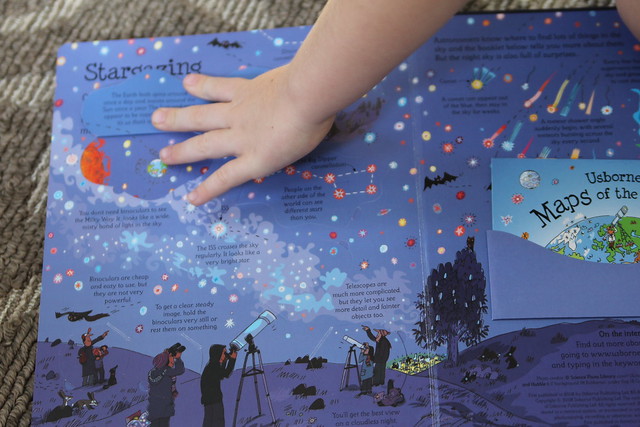
Here are some Stephen Cartwright books from Usborne Books & More with a little duck on each page.

  • Spin offs
Finding the mouse in Goodnight Moon with my second son was not quite as novel, so I was overjoyed when their older cousin who works in a bookstore sent us Goodnight iPad. There must be thousands of versions of every Disney story, Fairy Tale and many others. Try different versions to shake things up.   Try different books by the same author.   We love borrowing books from our local library because the books are just borrowed and so even if we read one endlessly it can be return in two weeks.

Here are some Usborne Books & More Fairy Tale books. They come in collections, beautiful laser cut flap books and even ones with masks to act out the story!


 And then move on
Okay, enough is enough. Sometimes it is up to you to expand your child’s horizons and show them what else is out there. How can they truly know what their favorite book, subject or character is when there are so many they haven’t met yet.  I have different tolerance levels for my sons’ favorites. Thomas the Train and Dora the Explorer quickly make it to my “If I have to read this book one more time, I am going to GAG” List.  Some of my favorites are ones my boys would never select but do enjoy once I start reading.  So, generally I have them pick one book to read and I get to pick the other. I have been known to gently or humorously dissuade them from their “Gag” book of the week. “I can’t do it! I can’t read another Star Wars book. Please DON’T MAKE ME DO IT! But, if you let me pick the book tonight, we can read Star Wars tomorrow.”

Your child WILL forgive you and maybe even deep down appreciate it if you limit how many times he or she reads the same book over and over. Your child’s comprehension will naturally grow and the books on his book shelf should match his current level.

That isn't to say that you shouldn't try to select books that your children will enjoy. The Broomfield Public Library has these great bookmarks with lists of books in different categories and I'm sure your library does as well. This was a life saver when my eldest was going through his Thomas the Train obsession, refusing to read any book that didn't at least have a train in it.  As we were exploring train books it was fun to rediscover the Little Engine that Could, one of my childhood favorites. And of course the internet is a great resource for book lists of all kinds.


Nibbles the Book Monster has become a favorite book for Usborne Books & More fans across the county. There are so many little details in the delightful book that it will take many a read to tire of it.

The right tip at the right time
You have probably read the literature on how to create a reader and prepare your child for school. There are often many helpful tips. Most of the time though, they make me feel guilty that I am not doing enough. So I try to remember that my ultimate goal is to foster a love of reading.  Your child is much more likely to love books if they believe you love them too, if they are engaged and if reading with you is fun (for both of you).

Yes, it will help your child’s reading comprehension if you put your finger under each word as you read but, you are kind of wasting your time with your infant who can’t even begin to comprehend the meaning of what a word is.  ISo try to use your common sense about what ages to utilize different reading strategies.  Do what feels natural. Usborne's Very First Reading Set was one of the main reasons I joined the company. Besides the fact that the books get progressively more difficult and have a dual reader feature... they have little activities at the end that showed me how to help my kiddos differentiate between words, ask questions to see if they were comprehending the story and so much more!  

Reading with different voices is fun, occasionally, but it is definitely not my strong suit. I forget what voice goes with what character, I drop the voices altogether mid-way through, I am embarrassed by my own lack of ability in this area. Some books like  I absolutely cannot read without my gruffest voice “Who’s that trip trappin over my bridge?” 

As I mentioned above, sometimes we just want our kids to go to sleep and that is okay. At least once a week, maybe on the weekend, have some reading time where you go with the flow a little and don’t stick to the two books a night rule. Ask your child questions and let the conversation go where they lead it. It is amazing to hear what they have to say about the world when we stop to listen.